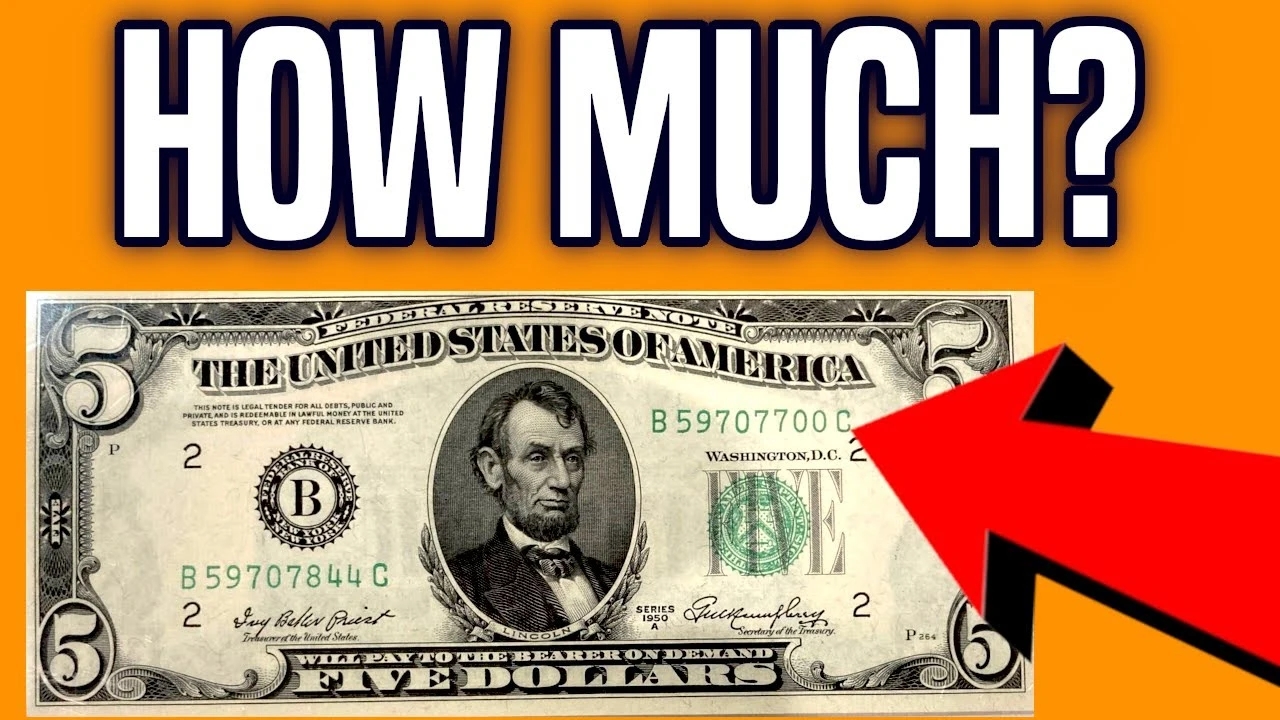
You might be surprised to learn that the loose cash in your wallet could be worth far more than its face value. Certain printing errors on U.S. paper currency have become highly desirable among collectors, and one of the most talked-about examples is the 1995 $5 bill with an upside-down seal. These rare misprints can sometimes sell for hundreds or even thousands of dollars, depending on condition and rarity. Knowing how to identify one could turn an ordinary bill into a valuable collectible.
IRS Confirms $2,000 Direct Deposit for January, 2026 – New Payment Dates and Eligibility Guide
What Is an Upside-Down Seal Error?
On standard U.S. currency, the Treasury seal and serial numbers are printed in the same orientation as the portrait. An upside-down seal error occurs when the Treasury seal and serial numbers are accidentally printed inverted while the rest of the bill remains correctly oriented. This type of error usually happens during the printing process when sheets are fed incorrectly into the press.These mistakes are uncommon, making them especially appealing to currency collectors.
Why the 1995 $5 Bill Is Special
The 1995 series of the $5 bill is known among collectors because a limited number of notes were printed with noticeable alignment errors, including inverted seals. While not every 1995 $5 bill is valuable, those with clear, documented printing mistakes stand out in the collector market.

The more dramatic and obvious the error, the higher the potential value.
How to Identify a 1995 $5 Bill With an Upside-Down Seal
To check whether your bill has this rare feature, follow these steps:
-
Confirm the Series Year
Look for “Series 1995” printed near the portrait of Abraham Lincoln. -
Check the Treasury Seal Orientation
Hold the bill upright so Lincoln’s portrait is facing correctly. The green Treasury seal should also be upright. If it appears upside down, you may have a valuable error note. -
Examine the Serial Numbers
In most upside-down seal errors, the serial numbers are also inverted. This strengthens the authenticity of the misprint. -
Look for Consistency
Genuine errors usually appear clean and deliberate, not smudged or altered. Any signs of tampering may reduce or eliminate value.
How Much Is It Worth?
The value of a 1995 $5 bill with an upside-down seal depends on several factors:
-
Condition: Crisp, uncirculated bills command higher prices
-
Clarity of the error: Fully inverted seals are more valuable than partial misalignments
-
Collector demand: Market interest can influence prices

In circulated condition, these bills may sell for several hundred dollars, while well-preserved examples can fetch significantly more.
What to Do If You Find One
If you believe you’ve found a genuine error note:
-
Handle it carefully to avoid damage
-
Store it flat in a protective sleeve
-
Consider having it authenticated by a reputable currency grading service
-
Avoid spending it until you know its true value

Final Thoughts
Checking your cash may seem like a small effort, but it could lead to a big discovery. A 1995 $5 bill with an upside-down seal is a fascinating reminder that even everyday money can carry hidden value. Taking a few moments to inspect your bills could turn pocket change into a prized collectible.
FAQ – 1995 $5 Bill With an Upside-Down Seal
Q1. What is an upside-down seal on a $5 bill?
It’s a printing error where the Treasury seal (and usually the serial numbers) appears inverted.
Q2. Are all 1995 $5 bills valuable?
No. Only bills with genuine printing errors, such as an upside-down seal, have added value.
Q3. How can I check if my bill has this error?
Look for “Series 1995” and see if the green Treasury seal is upside down when the portrait is upright.

Q4. How much could an error bill be worth?
Depending on condition and clarity of the error, it can be worth hundreds of dollars or more.
Q5. Should I spend or keep the bill?
Keep it and have it authenticated before spending—it may be worth far more than $5.
